
DE-ESCALATION CERTIFCATION INCLUDES:
- Downloadable Certificate
- Study At Your Own Pace
- Proven 5-Step Non-Violent Verbal Techniques
- Utilized By Major Hospitals, Institutions & Corporations
- Ideal For Staff, Security, And Care Teams
$79.95
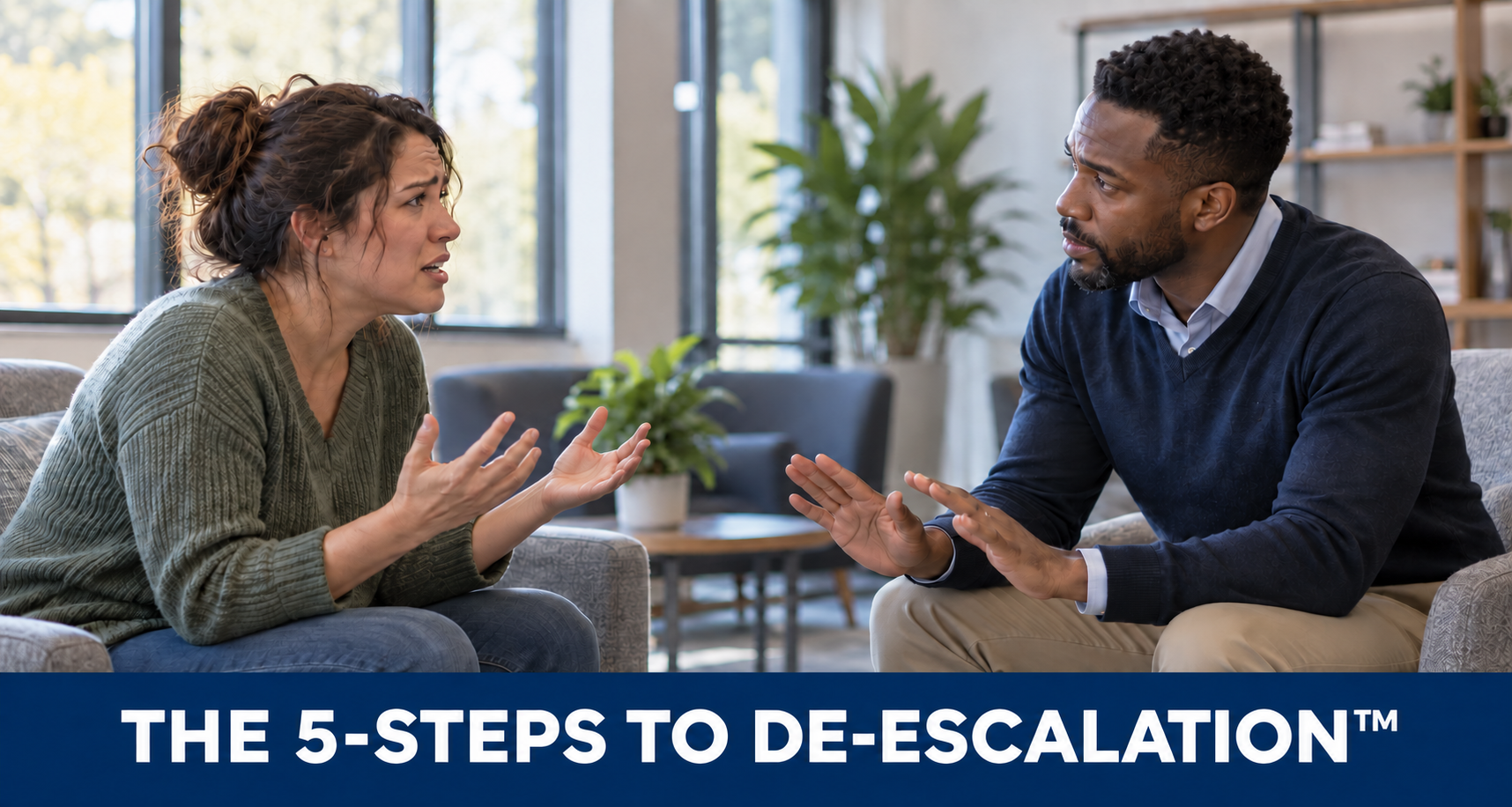
Organizations and their employees need the most effective verbal de-escalation training to prevent, deter, and stop crisis situations whenever possible. The Crisis Consultant Group has taken one of the most highly regarded de-escalation models (The 5-Steps To De-escalation) and packaged it in a simple, short, yet powerful online training & certification course.
I felt the instructor was highly competent in de escalation technique and kept my attention without getting technical
It was helpful and I feel like I learned a lot in this online verbal de-escalation course. I use verbal de escalation training in my work a lot so this is a big help.
Great verbal De-Escalation training online.
At first I thought I would just let it play without listening just get through it, but I began to listen, he made so much since and broke down why he says what he says, hes an excellent speaker and crisis de escalation training instructor.
Liked the cpi de escalation training videos and verbal de-escalation training provided in the course.
De escalation training certification provides structured professional training in the practical skills used to recognize escalation, assess risk, communicate effectively, and respond to challenging situations. Training programs can help employees, healthcare workers, educators, security officers, first responders, social workers, behavioral health professionals, and other human service providers develop greater confidence when working with people experiencing agitation, emotional intensity, distress, disruptive behavior, or aggressive behavior. A comprehensive approach emphasizes prevention strategies, situational awareness, active listening, de-escalation techniques, appropriate response, professional boundaries, personal safety, and workplace safety.
A de escalation training certification program can combine certification requirements with professional development, course material, assessment, scenario-based exercises, and practical skills for difficult interactions and crisis situations. Participants can learn verbal de-escalation techniques, nonverbal communication skills, tactical communication, conflict resolution skills, emotional regulation, body language, personal space, risk assessment, and effective communication. Certified instructors can also address crisis intervention, crisis prevention, workplace violence, critical incident stress, high-risk behavior, trauma-informed care, and methods for reducing unnecessary confrontation while maintaining mutual respect and an appropriate response.
De escalation training certification can also support employee training, safety training, and professional development across an organization. A structured certificate program may combine curriculum, course materials, online learning, evaluation, and successful completion requirements so learners can demonstrate practical de-escalation skills. Organizations can use this type of training program to support supervisors, managers, educators, healthcare professionals, security officers, and other employees while reinforcing workplace safety, professional standards, compliance, and organizational needs.
De escalation training online provides flexible access to de-escalation skills, professional development, and employee training through an online format rather than a traditional classroom. Online training can cover de-escalation strategies, communication skills, active listening, situational awareness, crisis prevention, emotional self-regulation, workplace conflict, and effective intervention. Flexible training options can allow participants to work at their own pace while learning how to recognize early warning signs, respond to agitation, manage difficult conversations, and address disruptive behaviors, hostile behavior, violent situations, or other challenging situations.
De escalation training online can help participants develop practical skills for challenging interactions and difficult conversations through effective communication, active listening, conflict resolution skills, and verbal de-escalation techniques. Training can also address nonverbal communication skills such as body language, eye contact, personal space, tone, voice, and word choice so participants can communicate calmly, recognize tension, and choose an effective intervention during crisis situations or hostile situations.
With de escalation training online, online learning can combine lessons, video, course materials, assessment, demonstrations, exercises, and other learning activities that reinforce practical de-escalation techniques. An online course can develop verbal communication, nonverbal communication, calm communication, listening, emotional control, interpersonal skills, risk assessment, conflict management, and workplace communication. This delivery method can support organizations with employees across different locations, including healthcare workers, nurses, counselors, social workers, support staff, frontline employees, security personnel, law enforcement, educators, and behavioral health professionals.
De escalation certification documents successful completion of a certificate program focused on de-escalation skills, prevention, communication techniques, risk awareness, and appropriate responses to escalating behavior. Certification programs can provide a structured curriculum for learning how to assess risk, recognize tension and agitation, use verbal de-escalation, maintain professional boundaries, and respond to crisis situations. These skills can help professionals manage interactions involving emotional intensity, psychological responses, behavioral challenges, inappropriate behavior, hostile behavior, aggressive behavior, or other high-stress situations.
A de escalation certification program can provide a structured curriculum for employee training, safety training, and professional development while establishing clear requirements for assessment and successful completion. The training program can help learners, employees, supervisors, and other professionals develop practical skills for assessing risk, communicating effectively, managing workplace conflict, and responding appropriately to challenging situations while supporting workplace safety and organizational needs.
A de escalation certification program may include certification requirements involving a training course, course completion, assessment, education hours, contact hours, continuing education, and instruction from certified instructors. Professional development can include effective de-escalation techniques, active de-escalation strategies, practical skills, communication techniques, situational awareness, conflict resolution, risk levels, workplace safety, and crisis intervention. Scenario-based exercises can give participants experience choosing the right response, using non-restrictive methods where appropriate, maintaining personal safety, and applying de-escalation strategies to difficult interactions.
Online de escalation training teaches practical methods for recognizing escalation and using communication strategies to reduce tension and support safer interactions. Participants can develop de-escalation skills involving active listening, verbal de-escalation techniques, nonverbal communication, emotional regulation, body language, personal space, word choice, tone, voice, and conflict resolution. Online training can also address crisis prevention, workplace violence prevention, disruptive behaviors, aggressive behavior, hostile situations, mental health concerns, and early warning signs that may indicate an interaction is becoming more difficult or potentially dangerous.
Effective online de escalation training develops communication skills and practical de-escalation techniques that participants can apply during real-world interactions. Active listening, respectful communication, empathic listening, verbal communication, nonverbal communication skills, facial expressions, body language, and emotional intelligence can influence how a person responds during stressful situations. Training can strengthen situational awareness, help participants assess risk, understand behavioral risk factors, recognize emotional intensity, manage their own emotions and own response, and choose an effective approach based on the behavior, environment, and risk level.
De escalation training certification online combines online training with a structured certification process for participants who need documented professional development in de-escalation skills. Online courses can provide instruction in de-escalation techniques, communication skills, active listening, crisis prevention, conflict management, situational awareness, emotional regulation, and workplace safety. The online format provides flexible access for employees and professionals while allowing organizations to support staff skills, professional standards, continuing education, safety culture, psychological safety, and organizational needs.
Through de escalation training certification online, participants can use online learning or e-learning to complete course materials covering practical de-escalation techniques and responses to difficult situations. Course completion may involve lessons, video-based training, assessment, simulations, scenario-based exercises, or other learning experiences designed to evaluate understanding and reinforce practical skills. Topics can include effective communication, nonverbal communication skills, conflict resolution, professional boundaries, risk assessments, behavioral risk factors, crisis intervention, behavior management, trauma-informed approaches, workplace violence prevention, and strategies for responding to agitation, emotional distress, hostile situations, aggressive behavior, and workplace conflict.
Verbal de escalation training teaches communication skills and practical de-escalation techniques for reducing tension before an interaction develops into greater conflict. Participants learn verbal de-escalation techniques, active listening, respectful communication, conflict resolution, and strategies for responding to frustration, agitation, heightened emotions, aggressive behavior, and other challenging behavior. Effective verbal de-escalation also requires situational awareness and emotional self-regulation so the person responding can remain calm, recognize escalating behavior, and communicate in a professional manner during difficult conversations, stressful situations, or crisis situations.
Effective verbal de-escalation techniques involve more than the words used during an interaction. Tone of voice, body language, facial expressions, eye contact, posture, gestures, personal space, and other nonverbal cues can influence how another person interprets communication. Training helps participants combine verbal and non-verbal communication with active listening, appropriate word choice, emotional regulation, and practical strategies for managing tense situations, workplace conflict, hostile behavior, and potential conflict while working toward cooperation, mutual respect, and positive outcomes.
Related Pages:
Scenarios, cpi certification online, Technique, Recovery, Change, Way, Systems, Industries, Organization, Teachers, Leadership, Tips, Outcomes, Clients, Impact, Nursing, Resources, Schools, Incidents, Success, Activity, Situation, Crises, Solutions, Individuals, Teams, What is a nonviolent crisis intervention certificate?
De-Escalation Certification, De-Escalation Certification Program, De-Escalation Certification Programs, De-Escalation Training Certification, Cpi Training For Nurses, De-Escalation Training Certificate, De-Escalation Training, De-Escalation Training Course, Online De-Escalation Training, De-Escalation Program, Verbal De-Escalation Training, De-Escalate Situations
Instructor Certification Course, In-Person Courses, Associate Instructor, Restraint Training, Education Units, Professional Counselors, Communication Provider, Continuing Education Program, Retail Workers, Verbal Judo Training, Physical Skills, Development Specialist, Right Tools, Social Work Examiners, Various Aspects, Professional Webinar, Tactical Empathy
Public Safety, Nonviolent Crisis Intervention, Universal Principles, Customer Service Representatives, Customer Service, Dangerous Situations, Difficult Interaction, Social Work, Peer Support, Right Response Difference, Supportive Stancesm, Mental Health Professionals, Social Services, Mental Illness, Accredited, Safety Training
Supervisor, Regulations, Learning Environments, Workplace Culture, Social Worker, Coping Skills, Practice, Lecture, Accreditation, Office, Workshop, Midwives, Team, Harm, Point, Job, Relies, Data
De-Escalation Training Online, De-Escalation Training Improves, De-Escalation Certification Training, Effective De-Escalation Skills, De-Escalation Basics, De-Escalation Basics™, Common De-Escalation Communication, Verbal De-Escalation Strategies, In-Person Training Pricing, Verbal Intervention™ Training, DBH Training Institute, Available Online, Full Course, Important Skills, Effective Methods
Education Department, Restrictive Interventions, Addiction Professionals, Bus Drivers, Social Work Boards, Practical Approach, Management System, Retail Industry, Crisis Consultant Group, Angry Person, Medical Examiners, Approved Provider, Community Members, De Escalation Techniques, De Escalating, Onboarding
Violence In The Workplace, Rehabilitation Centers, Continuing Medical Education, Learning Management System, Workshops, Self Defense Techniques, Frustration, Negotiations, Communicating, Management Skills, Learning Environment, Correctional Facility, Conflict In The Workplace, Counselor, Verbal Judo, Inpatient
Certifications, Licensed Professional Counselors, Work Safety, Restraints, Evaluation, Educator, Methodology, Protests, Reinforcement, Coping Strategies, Clinical Social Work, Addiction Programs, Patient Safety, Crisis Management, Counseling, Occupational Safety, Employers
Cognitive Processes, Posture, Mental Health Counselors, Profession, Professionalism, Specialty, Opportunities, Ability, Authority, Ways, Defuse, Cooperation, Tool, Trust, Business, Someone, State, Roles, Specialties
Non-Violent De-Escalation Training, On-Demand De-Escalation Courses, Online Employee De-Escalation, Verbal De-Escalation Skills, Relevant Training, Instructor Courses, CPI Training, Train-The-Trainer Framework Increases, De-Escalate Medium, Behavior Escalates, Professional Instructors
School Safety, Staff Gain Skills, Verbal Judo Institute, School Staff, Safe Workplaces, Appropriate Staff Intervention, Crisis Prevention Course, Crisis Prevention Class, Multiple Employees, Physical Level, Crisis Intervention Specialists, Directive Approach, Behavioral Levels, Industry-Leading Programs, Non-Verbal Techniques
Human Services, Different Levels, Many Organizations, Challenging Behavior, Human Behavior, Behavioral Patterns, Supportive Stance™, Right Response Gen, Therapeutic Relationship, Edge Approach, Appropriate Boundaries, Supervisors, Continuing Education Units, Educational, Learner, Compliance, Tuition, Learners
Organizational Resilience, Special Education, Campus, Organizational Culture, Managers, Elearning, Assessing Risk, Expert, Martial Arts, Healthcare Professional, School Psychologist, Payment, Soft Skill, Exercise, Empowerment