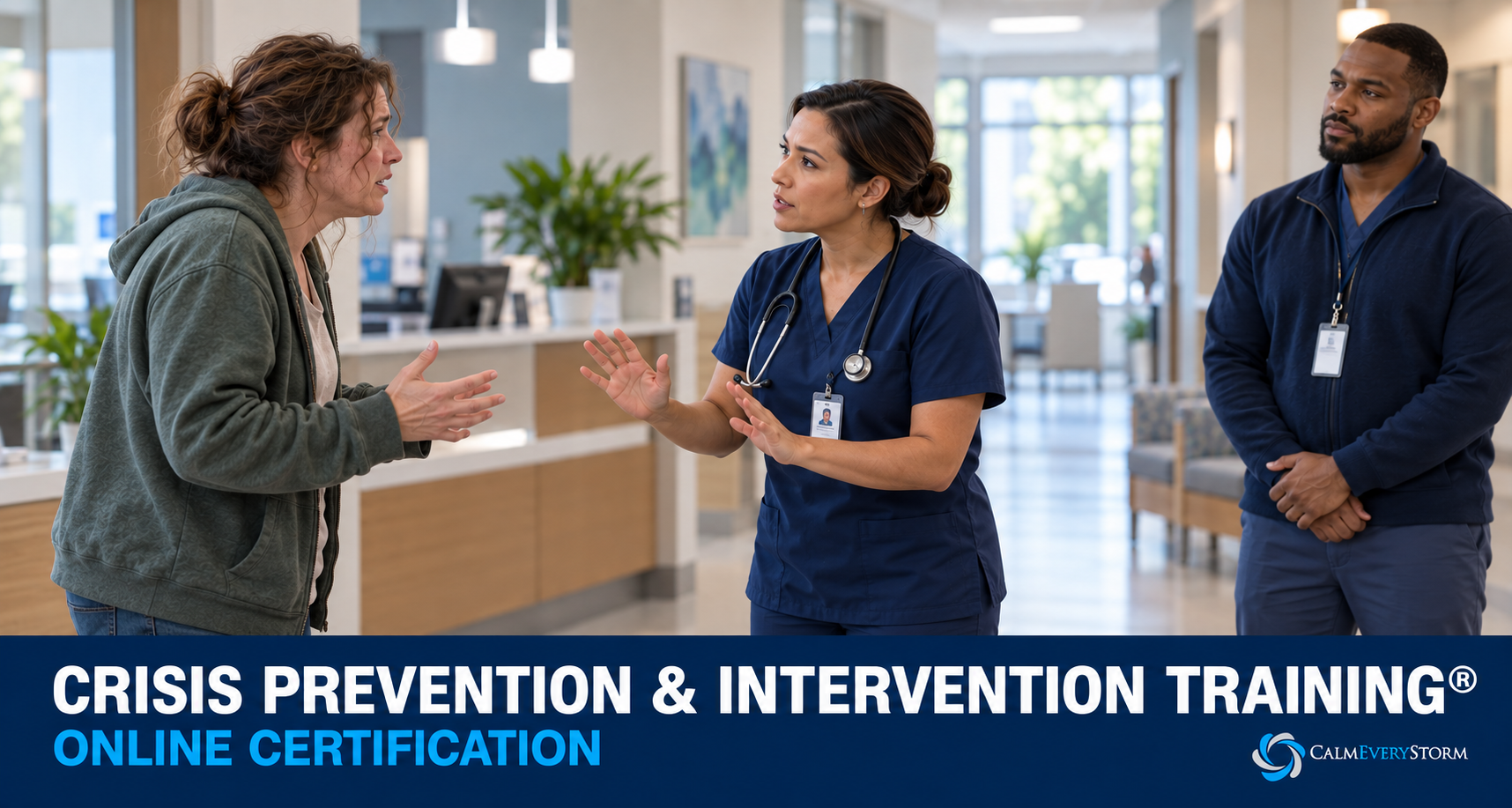
Modern crisis prevention and intervention training grew out of major changes in mental healthcare during the mid-20th century. As psychiatric care shifted away from large institutions and toward community mental health centers, hospitals, residential programs, and other settings, more frontline professionals began encountering people experiencing behavioral and emotional crises. This created a growing need for practical skills that went beyond simply controlling dangerous behavior—staff needed to recognize warning signs, communicate effectively, reduce escalation, and respond safely using training in de escalation certification.
During the 1970s through the 1990s, the field increasingly emphasized prevention, verbal de-escalation, risk assessment, personal safety, and least-restrictive intervention. Concerns about patient rights and the risks associated with restraint and seclusion accelerated this change. Organizations such as CPI, founded in 1980, became prominent providers of structured crisis-intervention training, but the broader discipline of crisis intervention, de-escalation, and restraint reduction had already been developing across psychiatry, nursing, social work, and community mental health for decades.
Tags:Crisis,Prevention,Certification
CPI Training Certification Online
CPI Training Certification Online provides professionals with flexible, self-paced crisis prevention and intervention training focused on communication, verbal de-escalation, early intervention, risk assessment, and crisis response. The online course combines structured instruction, multimedia learning, practical exercises, and final testing with a downloadable certificate and PDF handbook.
CPI Training
CPI Training develops the knowledge and practical skills needed to recognize behavioral challenges, respond to escalating situations, communicate effectively, and support safer outcomes. Training connects prevention, assessment, communication, early intervention, de-escalation, and crisis response so participants can make informed decisions as situations develop. CPI Training is often referred to as NVCI Training.
Training Programs, Curriculum and Learning Objectives
Training programs, crisis prevention intervention certification, curriculum and learning objectives provide the structure for developing crisis prevention and intervention skills. The curriculum helps participants understand how behavior, communication, risk, intervention strategies, and safety relate throughout an escalating situation. Learning objectives include recognizing precursors to crisis, identifying behavioral changes, improving communication, assessing developing risks, and selecting appropriate intervention strategies.
Instruction, Participants and Practical Skills
Instruction, participants and practical skills are closely connected throughout the training process. Participants develop skills in observation, Cpi Certification Nursing communication, decision-making, verbal de-escalation, professional distancing, rapport building, and appropriate crisis response. Practical exercises help participants move from understanding these concepts to applying them in realistic situations.
CPI Courses
CPI courses may be organized through a certification program that combines training and development, adult education, structured instruction, and practical learning for learners seeking relevant training in crisis prevention and intervention. CPI programs can include core programs, certificate programs, guidance from a CPI instructor, course materials such as a CPI workbook, assessment activities, examinations, and a final exam before successful completion. The methodology may also include practical exercises, communication skills, intervention strategies, and documentation requirements, with a renewal process available when ongoing certification or updated training is required.
CPI Classes
CPI Classes – An intervention course may be offered as a self-study course, included within core training programs, supplemented by a hands-on course, and structured to provide required contact hours.
Communication Skills, Early Intervention and De-Escalation
Communication skills, early intervention and de-escalation work together throughout crisis prevention. Recognizing precursors and behavioral changes early creates more opportunities to communicate, establish rapport, reduce tension, and intervene before a situation progresses into a more serious crisis.
Crisis Communication and De-Escalation Skills
Crisis communication and de-escalation skills include verbal communication, active listening, tone, body language, personal space, rapport, and clear directions. Participants learn non-violent and non-confrontational techniques designed to reduce unnecessary confrontation while maintaining appropriate professional boundaries and attention to safety.
Behavioral Challenges and Early Intervention
Behavioral challenges and early intervention are connected through recognition of warning signs and changes in behavior. Identifying these changes gives staff an opportunity to assess the situation and determine whether communication, support, redirection, environmental changes, or another intervention strategy may be appropriate.
Risk Assessment, Situational Awareness and Crisis Response
Risk assessment, situational awareness and crisis response connect observation with practical decision-making. Participants learn to consider behavior, warning signs, environmental conditions, available resources, and the potential for escalation when determining an appropriate response.
Risk Assessment and Intervention Strategies
Risk assessment and intervention strategies help participants match their response to the circumstances. Communication and verbal de-escalation may be appropriate in one situation, while a developing crisis may require additional assistance, greater attention to safety, or established organizational procedures.
Situational Awareness and Safety
Situational awareness and safety involve remaining attentive to the individual, environment, other people nearby, and changes occurring throughout an interaction. Communication, assessment, early intervention, de-escalation, and appropriate crisis response all contribute to safer decision-making.
CPI Certification
CPI Certification may refer specifically to certification provided through Crisis Prevention Institute (CPI®). Crisis Consultant Group does not provide CPI® certification and is not affiliated with Crisis Prevention Institute. Crisis Consultant Group provides its own Crisis Prevention & Intervention Training (CPIT)® program with online training, assessment, a downloadable certificate, and certification options.
Certification Requirements, Standards and Professional Credentials
Certification requirements, standards and professional credentials determine what participants must complete and what documentation they receive. Requirements can vary according to the training provider, employer, profession, organization, and certification option. Participants should understand the curriculum, assessments, completion standards, certification period, documentation, renewal expectations, and any optional components required for their professional needs.
Certification Programs and Certified Instructors
Certification programs and certified instructors can differ between training providers in curriculum, standards, course format, certification periods, and completion requirements. Participants who are required to complete a specific provider’s certification should verify that requirement before enrolling in an independent training program.
Professional Standards and Training Requirements
Professional standards and training requirements may differ according to an employer, facility, profession, licensing body, accrediting organization, or workplace policy. Participants should confirm whether a specific credential, renewal period, continuing education component, or physical intervention component is required.
Assessment, Evaluation and Successful Course Completion
Assessment, evaluation and successful course completion help determine whether participants understand the training material. Course exercises and final testing reinforce communication, prevention, intervention, de-escalation, risk assessment, crisis response, and safety principles.
Certification Exam and Course Assessments
Certification exams and course assessments evaluate knowledge developed throughout the curriculum, including warning signs, crisis communication, de-escalation techniques, intervention strategies, risk assessment, decision-making, and crisis response.
Course Completion and Certification Documentation
Course completion and certification documentation provide a record of successfully completing the applicable training requirements. Participants receive a downloadable certificate that can be downloaded and printed for professional records. The standard certification length is one year, with an optional two-year certification available.
CPI Training Online
CPI Training Online provides flexible access to crisis prevention and intervention education without requiring attendance at a scheduled classroom course. Participants to work through instruction, practical exercises, and final testing according to their own schedules.
Online Learning, E-Learning and Flexible Training
Online learning, e-learning and flexible training give individuals and organizations greater control over when and where training occurs. Online delivery eliminates travel and fixed classroom schedules while providing a structured learning environment for professional development.
Online Courses and Learning Environments
Online courses and learning environments organize related concepts into a structured sequence. Providers use interactive multimedia consisting of audio, video, visual aids, practical exercises, and final testing to develop crisis prevention, communication, assessment, early intervention, de-escalation, and response skills.
Self-Paced Training and Flexible Access
Self-paced training and flexible access allow participants to complete training around existing professional and personal responsibilities. Participants can train at their own pace rather than attending a predetermined live classroom schedule.
Online Course Curriculum, Instruction and Assessment
Online course curriculum, instruction and assessment work together throughout the learning process. Multimedia instruction introduces and develops the concepts, practical exercises reinforce their application, and final testing evaluates understanding before successful course completion.
Training Modules and Online Assessments
Training modules and online assessments cover subjects including verbal de-escalation techniques, non-violent and non-confrontational techniques, precursors to crisis, motivating persons in crisis, the crisis cycle, passive non-compliance, professional distancing, rapport building, and implicit bias.
Training Materials and Downloadable Handbook
Training materials and a downloadable handbook support the online curriculum. The course includes a PDF handbook valued at $40 that participants can download and use as a reference alongside the instructional material.
CPI Certification Online
CPI Certification Online combines online learning with structured instruction, practical exercises, assessment, final testing, and documented course completion. Participants can complete courses remotely and download and print their certificate and handbook after satisfying the applicable requirements.
Online Certification, Assessment and Course Completion
Online certification, assessment and course completion progress from multimedia instruction and practical exercises through final testing and certification documentation. The course is available in the USA, Canada, and internationally. Participants completing training for an employer or professional requirement should verify that the selected credential and course format meet their organization’s requirements.
CPI Course
CPI Course training brings crisis prevention and intervention concepts together within a structured curriculum. Communication, behavioral awareness, verbal de-escalation, assessment, intervention, and crisis response are developed as related skills rather than isolated techniques.
Course Curriculum, Training Objectives and Practical Skills
Course curriculum, training objectives and practical skills progress from recognizing precursors and understanding behavioral responses to communication, professional distancing, rapport building, verbal de-escalation, intervention, and crisis response.
Instruction, Exercises and Training Materials
Instruction, exercises and training materials reinforce the course curriculum through interactive audio, video, visual aids, practical exercises, final testing, and a downloadable handbook.
Communication, Prevention and Intervention Strategies
Communication, prevention and intervention strategies provide participants with multiple options for responding to challenging situations. Communication skills, rapport, early intervention, verbal de-escalation, risk assessment, and crisis response function as related parts of the broader prevention and intervention process.
CPI Certification Cost and CPI Training Cost
CPI Certification Cost and CPI Training Cost vary by training provider, course format, certification requirements, included training materials, professional credentials, and renewal options. When comparing cost, participants should consider what is included with the certification program and whether it meets their specific training and workplace requirements.
Course Cost, Fees, Tuition and Training Options
Course cost, fees, tuition and training options should be compared according to what is included with the program. Different options may include different certification periods, continuing education credits, course materials, physical intervention components, or professional requirements that affect the total cost.
Online Training, Course Options and Pricing
Online training, course options and pricing allow participants to select training according to their professional needs. The $139.95 online course includes the non-violent training program, downloadable certificate, PDF handbook, self-paced instruction, verbal de-escalation training, practical exercises, and final testing. Optional additions include 3.5 RN CEUs for $24, non-violent physical intervention training, and a two-year certification option.
Certification Requirements and What Is Included
Certification requirements and what is included are important considerations when evaluating training cost. The base course includes approximately 3.5 hours of interactive multimedia training, practical exercises, final testing, a downloadable certificate, and a downloadable PDF handbook. Participants who need continuing education, physical intervention training, or a longer certification period can select the appropriate additional option.
Certification Benefits and Course Completion
Certification benefits and course completion include both documented training and development of practical communication, crisis prevention, verbal de-escalation, assessment, and intervention skills.
Certificate, Documentation and Training Materials
Certificate, documentation and training materials are provided with successful course completion. The certificate and handbook can be downloaded and printed, providing participants with immediate access to their completion documentation and course reference material.
CPI Renewal and Recertification
CPI Renewal and Recertification allow professionals to update crisis prevention and intervention training and maintain current certification documentation when required by an employer, organization, or professional standard. Certification for standard certification is typically valid for one year, with an optional two-year certification available.
Refresher Courses, Renewal Training and Professional Development
Individual CPI Training, Refresher courses, renewal training and professional development reinforce communication skills, recognition of crisis precursors, early intervention, verbal de-escalation, risk assessment, crisis response, and safety principles. Because recertification requirements and renewal periods differ between providers, employers, and organizations, participants should verify the requirements that apply to their professional situation.
Instructor, CPI Techniques, CPI Strategies, Safety Training, Initial Training, Learning Management System, Blended Learning, Flexible Training Options, Train At Your Own Pace, Online Programs, Healthcare Professionals, Behavioral Health Professionals, Mental Health Professionals, Staff Training, Workplace Safety.
CPI Certificate
A CPI Certificate documents successful completion of crisis prevention and intervention training. Certification requirements, credentials, and compliance standards vary by employer and training provider, so participants should verify the specific credential required for their workplace.
CPI Online Training
CPI Certified
CPI De Escalation Training
CPI De Escalation Training develops communication skills and verbal de-escalation techniques for recognizing agitation, reducing tension, and responding to early warning signs before further escalation. Active listening, nonverbal communication, rapport building, and professional distancing support a safer and more appropriate response to challenging behavior.
CPI Cert
CPI License
CPI Crisis
CPI Online
CPI Trainings
CPI Intervention
Online CPI Training
CPI Intervention Training
CPI Course Online
Online CPI Certification
CPI Classes Online
CPI Certification Lookup
CPI Class Online
CPI Online Certification
CPI Prevention
CPI Online Course
CPI Crisis Training
CPI Recertification
CPI Renewal Online
CPI Training Certificate
CPI Refresher Course
Online CPI
Individual CPI Training Classes
CPI Certifications
CPI Train
Cost Of CPI Training
CPI Training Price
CPI Training Courses
CPI Certification Training
CPIT Certification
CPI Training Course
CPI Certification Renewal
CPI Verification
Employees, Practices, Members, Confidence, Settings, Students, CPI Exam, Social Workers, Crisis Situations, Therapy, Educators, Agencies, Methods, Experience, Job, Trauma, Stress, Emergency, Community, Crisis Intervention Training, Healthcare Providers, Employee Engagement, Nurse Training, Crisis Management, Conflict Resolution, Intervention Response, Evidence-Based Training, Staff Skills, Risk Levels, Early Signs, Early Warning Signs, Mental Health Services, Mental Health Concerns, Healthcare Workers, Human Services, Direct Support Professionals, Support Staff, Staff Members, Law Enforcement, Personal Safety, Physical Harm, Physical Skills, Restrictive Interventions, Nonviolent Crisis Intervention, Dangerous Situations, Difficult Situations, High-Risk Situations, Vulnerable Populations, Trauma-Informed Approaches, Disruptive Behaviors, Aggressive Behavior, Violent Behavior, Substance Abuse, Autistic Children, Few Hours, Emotional Distress, Critical Thinking, Multiple Employees, CPI Nursing Certification.
CPI Certification Ontario
CPI Certification Ontario requirements can vary by employer, organization, training provider, and workplace policy. Professionals in Ontario seeking online crisis prevention and intervention training should verify the required certification program, professional credentials, course format, and renewal requirements before enrolling.
CPI Certification Texas
CPI Certification NC
CPI Training Online Canada
CPI Certification Canada
Crisis Intervention Training Online Canada
Leadership, Model, Learners, Industry, Clinicians, Schools, State, Concerns, Impact, Framework, Conflict, Law, Distress, Culture, Questions, Restraint, Disabilities, Risk Assessments, Crisis Intervention Services, Workforce Development, Emotional Regulation, Coping Skills, Developmental Disabilities, Healthcare Staff, Simulation, Patient Safety, Employee Safety, Staff Retention, Crisis Prevention Course, Crisis Prevention Class, Crisis Intervention Skills, Practical Components, Crisis Communication Techniques, Situational Assessments, Behavioral Health Services, Behavioral Risk, Mental Health Crisis, Nursing Professionals, Human Service Organizations, Social Services, Agency Staff, Security Personnel, Law Enforcement Agents, First Responders, Workplace Culture, Physical Restraint, Physical Interventions, Physical Maneuvers, Nonviolent Intervention, Harmful Situations, Real-World Experiences, Trauma-Informed Care, Assaultive Behavior, Dedicated Line, Suicidal Ideation, Mental Illness, Nursing program,Crisis prevention certification online,Crisis prevention online.
Crisis Intervention Online Training
Crisis Prevention Training
CPI Crisis Prevention
CPI Crisis
Crisis Intervention Prevention
CPI Crisis Intervention
Crisis Prevention Certification
Crisis Prevention And Intervention Training
CPI Crisis Prevention Intervention
Crisis Prevention And Intervention
Crisis Prevention Intervention Training Online
Crisis Intervention Training Certification
Crisis Intervention Certification Online
Online Crisis Intervention Training
Crisis Prevention Intervention CPI
Crisis Prevention Intervention Certificate
Crisis Prevention And Intervention Training Online
Crisis Intervention Certificate Online
Crisis Intervention And Prevention
Crisis Prevention And Intervention Certification
Crisis Prevention Training Online
Crisis Intervention Prevention Training
CPI Crisis Training
Crisis Prevention Intervention Certification Online
Crisis Prevention And Intervention Certificate
Crisis Prevention Certification Online
Crisis Prevention Certificate
Situational Assessment, Assessing Risk, Challenging Behavior, Behavioral Crisis, Conflict Management, Supportive Approach, Best Practices, Certification Program, Certification Credentials, Flexible Online Training, On-Demand Training, Special Education, Correctional Facilities