
Online Non-Violent Training Certification Options
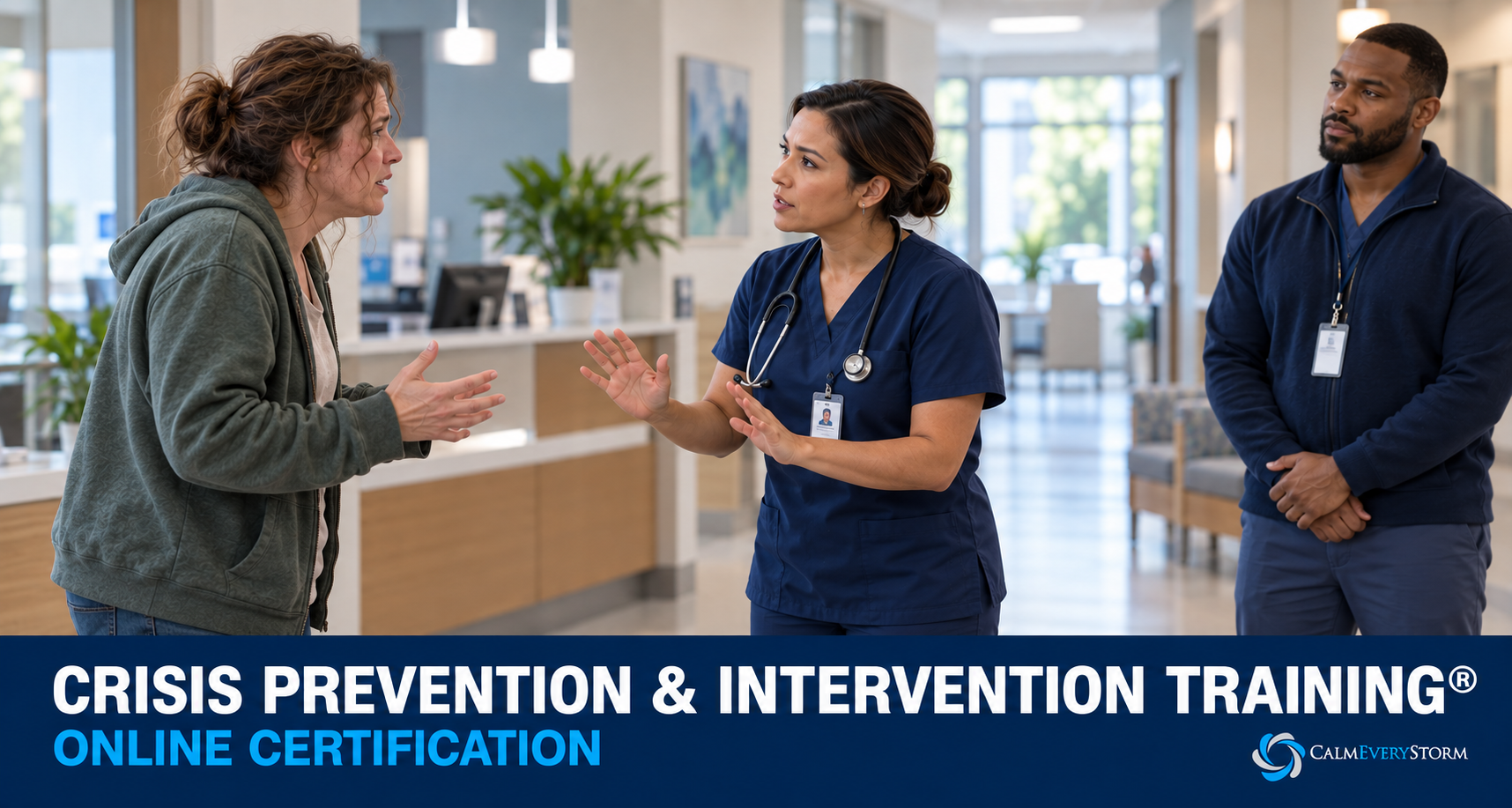
Crisis Prevention & Intervention Training®
$139.95
- Downloadable Certificate
- PDF Handbook ($40 Value)
- Train At Your Own Pace
- Proven Verbal De-Escalation
- Best Practice & Evidence Based
- Optional: 3.5 RN CEU’s Only $24
- Optional: Non-Violent Physical Intervention
- Optional: 2 Year Certification
Proven For: Hospitals, Health Care, Retail, Corporate, Security, Corrections & Group Homes
Our training is the fastest and easiest way for professionals to become certified or to recertify in crisis prevention intervention.
For Organizations Seeking ON-LOCATION Training – Learn More Here
Organizations That Trust Our Crisis Prevention Certification

Online Crisis Intervention Certification Client Testimonials
“A highly recommended online crisis intervention certification course, 10 out of 10. I am much more confident in my ability to handle verbal confrontation, and even violent individuals since attending this course.”
-B. Collins, Probation Officer, VA
“Simple and respectful. The physical techniques taught will work in real crisis situations due to the ability to stabilize and control the aggressive and violent person. It maintains the sense of security for the individual and doesn’t impede their ability to breathe and calm down. CCG techniques are much better than those I learned in other programs.”
-A. Remley, Substance Abuse Counselor, VA
“Techniques were simple to perform, and are respectful to client and staff. It is a great new focus on handling crisis. Appropriate amount of time spent on stressing verbal intervention and safety, rather than going immediately to physical intervention. I was looking for training online, and found this program to be extremely helpful.”
-P. Schneeman, Training Coordinator, VA
“This is one of your recent students from your Train-The-Trainer course in CA. Frankly, you have your program on lock and are truly awe inspiring. Brendan, it’s obvious that you’re really on to something great here with CCG. ”
-Karette F, Youth Corrections Counselor,CA
“I was looking for nonviolent intervention training online and found your online crisis intervention certificate course”
-Allan Johnstone
We provide effective Crisis Prevention Training for any workplace environment.

We provide online crisis intervention certification for all 50 U.S. states and Canada
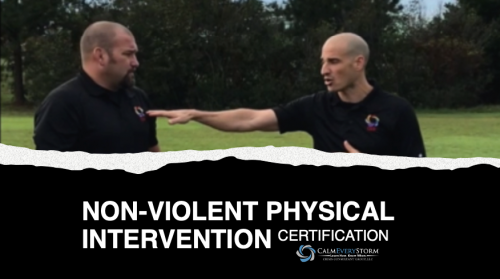

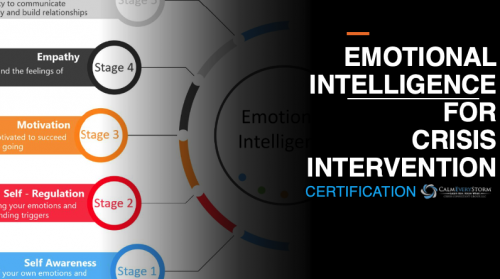
For those considering our Crisis Prevention & Intervention Training (CPIT)® as an alternative to NVCI® (Non-Violent Crisis Intervention®) or CPI® (Crisis Prevention Institute®):
Crisis Consultant Group provides independently developed crisis prevention, de-escalation, and safety training. Compare our training approach, delivery options, course structure, and organizational support to determine which program best meets your needs.
Trademark and Non-Affiliation Notice: NVCI® (Non-Violent Crisis Intervention®) and CPI® (Crisis Prevention Institute®) is a trademark of its respective owner. Crisis Consultant Group, Inc. is an independent company and is not affiliated with, sponsored by, endorsed by, authorized by, or associated with the owner of the NVCI® (Non-Violent Crisis Intervention®) trademark. References to NVCI® (Non-Violent Crisis Intervention®) are provided solely for identification, informational, and comparative purposes.
Tags:Crisis,Prevention,Certification
A History Of Crisis Prevention Intervention
Modern crisis prevention and intervention training grew out of major changes in mental healthcare during the mid-20th century. As psychiatric care shifted away from large institutions and toward community mental health centers, hospitals, residential programs, and other settings, more frontline professionals began encountering people experiencing behavioral and emotional crises. This created a growing need for practical skills that went beyond simply controlling dangerous behavior—staff needed to recognize warning signs, communicate effectively, reduce escalation, and respond safely. Learn more about Cpi Training For Nurses.
During the 1970s through the 1990s, the field increasingly emphasized prevention, verbal de-escalation, risk assessment, personal safety, and least-restrictive intervention. Concerns about patient rights and the risks associated with restraint and seclusion accelerated this change. Organizations such as CPI, founded in 1980, became prominent providers of structured crisis-intervention training, but the broader discipline of crisis intervention, de-escalation, and restraint reduction had already been developing across psychiatry, nursing, social work, and community mental health for decades.
What is NVCI Certification Online | Nonviolent Crisis Intervention Training?
NVCI certification provides professionals with training in nonviolent crisis intervention, crisis prevention, de-escalation techniques, communication skills, risk assessment, cpi certification, decision making, and strategies for responding to challenging or high-risk behavior. Online NVCI training is designed to help individuals and organizations develop practical skills for managing crisis situations while emphasizing safety, communication, prevention, and respectful intervention.
NVCI training can be valuable for professionals working in healthcare, behavioral health, education, social services, residential programs, community services, security, disability services, and other environments where employees may encounter individuals experiencing agitation, emotional distress, disruptive behaviors, aggression, or other challenging situations. Training focuses on understanding behavior, recognizing risk levels, selecting appropriate responses, and using the least restrictive and safest intervention appropriate to the situation.
NVCI Certification
NVCI certification documents successful completion of training focused on nonviolent crisis intervention and crisis prevention skills. A comprehensive NVCI course should help participants understand how crises develop, recognize early signs of escalation, assess risk, communicate effectively, and respond using practical intervention strategies. Training can include verbal de-escalation strategies, empathic listening, decision making, disengagement techniques, crisis management principles, physical safety concepts, and approaches for managing difficult behavior.
The NVCI certification process is especially relevant for organizations that need employees to develop consistent crisis prevention and intervention skills. Healthcare professionals, educators, direct support professionals, social service workers, clinical staff, residential staff, counselors, security personnel, and frontline workers may all encounter situations in which calm communication, situational awareness, risk assessment, and appropriate intervention are important.
What Is NVCI Certification?
What is NVCI certification? NVCI certification is a certificate earned after completing nonviolent crisis intervention training. The training is intended to give participants knowledge and practical tools for preventing escalation, recognizing challenging behavior, communicating during stressful interactions, evaluating changing risk levels, and responding to crisis situations. Certification provides documentation that the participant completed the required NVCI training program.
What Does NVCI Certification Cover?
NVCI certification can cover crisis prevention, crisis intervention, de-escalation techniques, communication, risk assessment, decision making, physical skills, disengagement techniques, challenging behavior, high-risk behavior, workplace safety, and strategies for responding to individuals experiencing behavioral or emotional crises. The objective is to help participants develop confidence and practical skills they can apply within their professional responsibilities and workplace environment.
NVCI Certification Online
NVCI certification online allows participants to complete nonviolent crisis intervention training through an online learning environment rather than relying entirely on traditional classroom training. Online training can provide convenient access to course materials, instructional content, self-paced modules, multimedia learning, and other resources that allow participants to work through training according to their own schedule.
Online NVCI certification can be especially useful for organizations with multiple employees, staff working different shifts, professionals in different locations, and individuals who need flexible access to training. Participants can complete an online course using a home computer or other compatible device while developing the same core knowledge related to crisis prevention, de-escalation, communication, risk assessment, situational awareness, and decision making.
Online NVCI Certification For Professionals And Organizations
Online NVCI certification can support professional development for healthcare professionals, educators, support staff, care workers, emergency medical technicians, social service professionals, residential staff, security personnel, and employees working with individuals who have developmental disabilities, behavioral health needs, mental health concerns, or other support needs. Organizations can also use online training to provide consistent educational content to multiple employees across different locations.
NVCI Certificate And Course Completion
An NVCI certificate provides documentation that a participant has successfully completed the applicable training course. For individuals, the certificate can become part of their professional training records or credentials. For employers and organizations, documentation of course completion can help demonstrate that staff members have received instruction in crisis prevention, nonviolent intervention, communication, de-escalation, and related safety concepts.
NVCI Training
NVCI training teaches practical strategies for recognizing and responding to escalating behavior before a situation becomes more serious. Training can help participants understand how behavior changes as risk increases, identify early warning signs, communicate more effectively, maintain appropriate personal and professional boundaries, and choose intervention strategies based on the individual, environment, and level of risk.
Effective NVCI training places strong emphasis on prevention. Participants learn that crisis intervention begins before a crisis reaches its highest level. Early communication, empathic listening, situational awareness, respectful interaction, and appropriate decision making can often reduce emotional intensity and create better opportunities for cooperation and safer outcomes.
What Is NVCI Training?
What is NVCI training? NVCI training is nonviolent crisis intervention education that develops skills for preventing escalation and responding to crisis behavior. Training may address de-escalation techniques, verbal intervention, communication skills, crisis prevention, physical safety, disengagement skills, assessing risk, challenging behavior, and appropriate responses to individuals experiencing emotional or behavioral crises.
NVCI Course
An NVCI course brings crisis prevention principles, communication strategies, intervention methods, and practical skills together within a structured training program. Relevant training should help participants understand why behavior may escalate, how their own communication and responses can influence an interaction, and how to select an appropriate intervention based on risk, circumstances, professional responsibilities, and organizational needs.
NVCI Training Online
NVCI training online provides flexible access to crisis intervention education for individuals and organizations that may not be able to attend conventional in-person classes. Online training can support staff development across healthcare settings, social services, education, behavioral health, residential programs, community organizations, and other workplaces where employees may need crisis prevention and de-escalation skills.
Nonviolent Crisis Intervention Training
Nonviolent crisis intervention training teaches staff how to prevent, recognize, and respond to escalating behavior while emphasizing communication, safety, respect, and appropriate intervention. Training can help participants understand crisis behavior, recognize risk factors, use verbal and nonverbal communication, apply de-escalation techniques, and respond to challenging situations without automatically relying on restrictive or physical interventions.
Nonviolent crisis intervention training is relevant in settings where staff may encounter aggression, disruptive behaviors, emotional distress, unpredictable situations, or individuals who have difficulty regulating their behavior. Healthcare facilities, behavioral health programs, schools, residential settings, disability services, community programs, social services, and other organizations can use this type of training to improve staff confidence and create more consistent responses to crisis situations.
Preventing And De-Escalating High-Risk Behavior
One of the central goals of nonviolent crisis intervention training is helping staff recognize escalation early enough to respond before behavior reaches a more dangerous level. Participants can develop skills in empathic listening, respectful communication, de-escalation, assessing risk, maintaining awareness of the environment, and adjusting their approach as a situation changes. These strategies can support safer interactions while preserving the dignity of the individual whenever possible.
Physical Skills, Restraints And Non-Restrictive Methods
Crisis intervention training may also address physical safety, disengagement techniques, restrictive interventions, physical restraints, and non-restrictive methods. Physical intervention should not be treated as the automatic response to challenging behavior. Training should help participants understand risk, prevention, de-escalation, and safer response options so that the level of intervention remains appropriate to the circumstances and the responsibilities of the professional involved.
What Is Nonviolent Crisis Intervention?
Nonviolent crisis intervention is an approach to preventing and managing crisis behavior using communication, de-escalation, risk assessment, intervention strategies, and safety principles designed to reduce escalation and improve outcomes. The approach recognizes that behavior exists within a broader context and that staff responses, communication style, environmental conditions, emotional intensity, and perceived threats can all influence how a crisis develops.
Effective nonviolent crisis intervention emphasizes prevention, understanding clients and their needs, identifying early signs of distress, assessing changing risk levels, and selecting responses that fit the situation. The goal is not simply to control behavior. The goal is to create safer conditions in which the individual and staff can move toward stabilization, communication, and a more positive outcome.
Nonviolent Crisis Intervention Certification
Nonviolent crisis intervention certification documents completed training in crisis prevention and nonviolent intervention skills. Certification can be valuable for professionals and organizations that want formal documentation of training related to de-escalation, communication, challenging behavior, crisis response, risk assessment, safety, and intervention strategies.
A nonviolent crisis intervention certificate can support professional training records for employees working in healthcare, education, social services, behavioral health, disability services, residential care, security, and other environments where crisis situations may occur. The training itself is intended to build knowledge, confidence, communication skills, and practical strategies that can be applied in real-world interactions.
NVCI Certification For Healthcare, Education And Human Services
NVCI certification and nonviolent crisis intervention training can be applied across a wide range of professional environments. Healthcare professionals and staff working in hospitals, skilled nursing facilities, behavioral health programs, rehabilitation settings, and other care facilities may encounter patients experiencing fear, confusion, agitation, mental health crises, cognitive impairment, or aggressive behavior.
Educators, school staff, disability-service professionals, direct support staff, counselors, residential workers, social service workers, and other helping professionals may encounter different circumstances but share a need for communication skills, risk assessment, de-escalation techniques, crisis prevention strategies, and thoughtful decision making. Training should give professionals principles they can adapt to the individual, the environment, organizational policies, and the level of risk present in the situation.
Crisis Prevention, De-Escalation And Risk Assessment
Strong NVCI training connects crisis prevention, de-escalation, communication, and risk assessment rather than treating them as separate skills. Staff should be able to recognize early signs that behavior is changing, consider environmental and situational factors, communicate in ways that reduce unnecessary conflict, and continually reassess risk as an interaction develops.
De-escalation techniques may include calm verbal communication, empathic listening, respectful body language, appropriate personal space, clear expectations, supportive responses, and strategies for reducing emotional intensity. Risk assessment helps staff determine when an interaction remains manageable through communication and when additional support or a different response may be necessary.
Why NVCI Certification Matters
NVCI certification is ultimately about preparing people to respond more effectively when behavior becomes challenging, unpredictable, or potentially unsafe. Professionals benefit from having a structured framework for understanding crisis behavior, assessing risk, communicating under pressure, and selecting appropriate prevention and intervention strategies.
Online NVCI certification and nonviolent crisis intervention training is for individuals and organizations seeking practical crisis prevention, de-escalation, communication, and intervention skills. The training is designed to help participants build confidence, improve professional responses, and approach difficult situations with greater awareness, preparation, and respect.
Multiple Industry Certifications, CPR Certifications, Blue Card Certification, NCI Training, Registration Form, Worker–Professional Diploma, IDEA Training, Training Problems, Experienced DSP, Education Units, Industry-Leading Programs, CPI Training, Training CPI, Education Credits, Training Ontario, Current CPR/First Aid, Service Point, First Aid/CPR, HMIS Systems, Adult Learner Unique, CPI Database, Overnight Supervisor, Field-Based Case Manager, Train-the-Trainer Framework Increases, Online Canada Crisis, Nova Scotia, Field Representative, District Staff, Consent Preferences, CPI Crisis Development, Canada Crisis Intervention, Caregiver Advancement, Specific Content, Summary Section, Crisis Prevention Intervention, Vital Role, British Columbia, Non-Violent Crisis Intervention, De-Escalate Medium, Behavioral Health Youth, Non-Violent Crisis Situations, Sexual Abuse, Instructor, Trainings, Member, Workshop, Code, Student, Tool, Objectives, Organization, Career, Trainers, Review, Jobs, Teachers, Intervention®, Roles, Recovery, Success, Hours, Homes, Benefits, Team, Model, Someone, Days, Way, Solutions, Path, Today, Note, Incident, Addiction, 4-Hour Certificate, Physical Wall Certificate, Verbal De-Escalation Training, Add-On Package, Violent Crisis Training, Smart Phone, Affordable Crisis Prevention, First Step, Middle East, Workplace Violence, Following Items, Learner, College, Specialty, Tuition, Industry, Form, Section, State, Technique, Template, Tips, Aid, Treatment, Questions, Adult, Years, Anyone, Children, Step
NVCI Programming, NCI Certification, Instructor Certification Programs, Agency Staff Training, Comprehensive Training, Crisis Prevention Training, Non-Violent Crisis Intervention Certification, Nonviolent Intervention Certification, Conflict Resolution Techniques, Risk Assessment Tools, Medium-Risk Behavior, Potentially Violent Situations, Evidence-Based Skills, Online Certification Course, Online Training Program, Asynchronous E-Learning, Online Coursework, Online and In-Person Training, Virtual NVCI Course, Virtual Certification Course
LPN, Regulations, Corporate Director, Learning Environments, NAMI, IDD, Collaborative Problem Solving, Fraud, Job Description, Healthcare System, Cooperative, Health Education, ASD, Licensure, Problem-Solving, Mentoring, Lessons Learned, Rapport, Autistic, Personalization, Analytics, Best-Practice, Webinars, Final Exam, Fee, Healthcare Professional, Profession, Prisons, American Association on Intellectual and Developmental Disabilities, Employer, Best Practices