
CERTIFCATION INCLUDES:
- Downloadable Certificate
- Study At Your Own Pace
- Proven 5-Step Non-Violent Verbal Techniques
- Utilized By Major Hospitals, Institutions & Corporations
- Ideal For Staff, Security, And Care Teams
$79.95
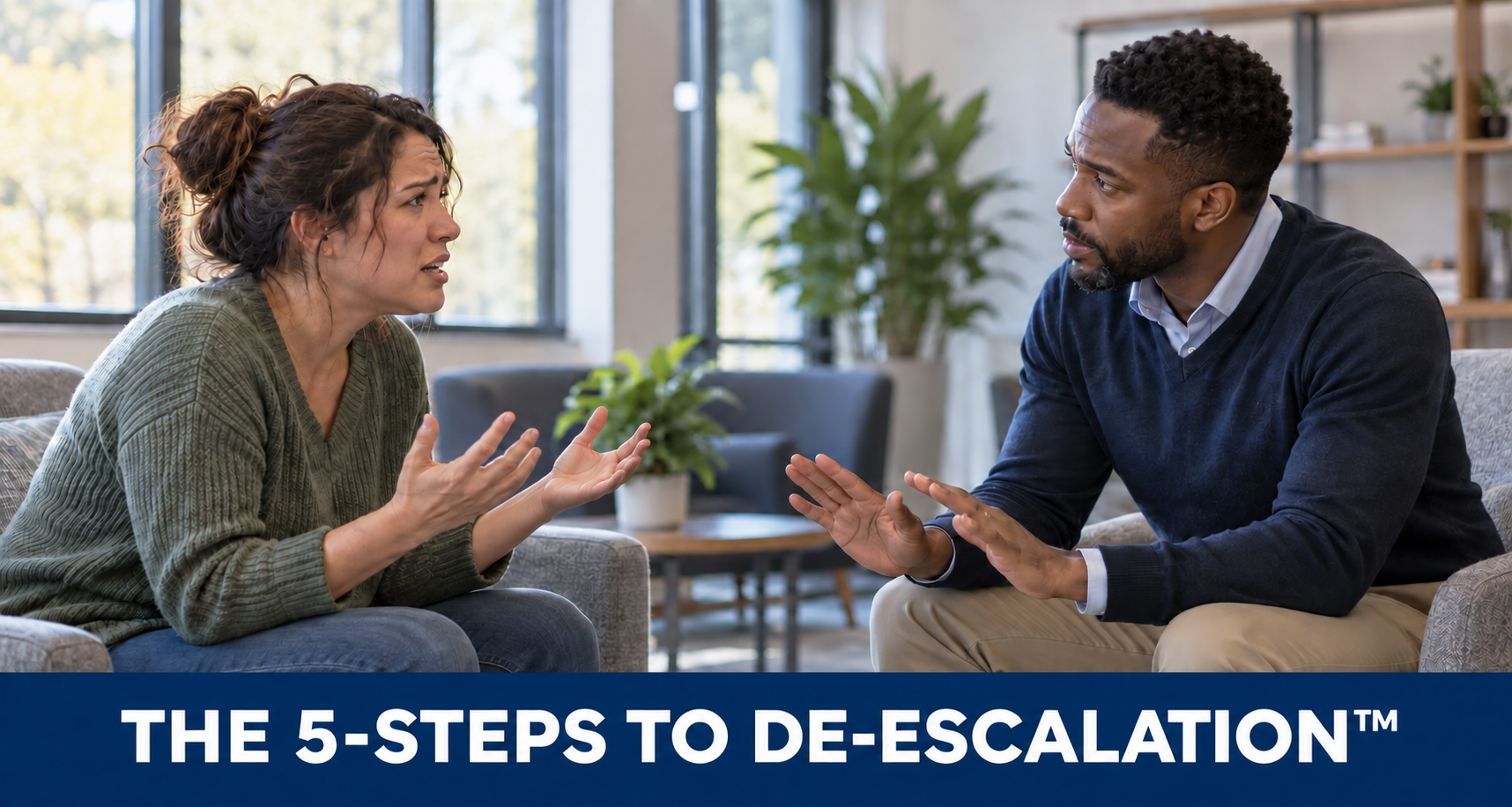
De-escalation training for security officers provides security professionals with practical communication skills, conflict resolution techniques, and crisis prevention strategies to manage challenging situations safely and effectively. Security personnel regularly encounter individuals experiencing frustration, agitation, aggressive behavior, or emotional distress. Knowing how to recognize escalating behavior and respond appropriately can help prevent confrontations from becoming physical.
Crisis Consultant Group provides de-escalation training designed to help security officers develop verbal de-escalation techniques, situational awareness, emotional self-regulation, and effective decision-making skills. The training emphasizes maintaining professional control, protecting public safety, and reducing the need for physical intervention whenever possible.
Security officer de-escalation training teaches personnel how to recognize potential conflict, assess behavioral escalation, and respond using appropriate communication and crisis intervention techniques. Security guards and officers are often responsible for maintaining safety in unpredictable environments where interactions can quickly become confrontational.
Effective de-escalation begins with identifying early warning signs of agitation, hostility, or emotional distress. Security personnel learn to evaluate the circumstances, establish communication, and select responses that minimize unnecessary escalation while maintaining appropriate professional boundaries.
Training also emphasizes the importance of balancing conflict resolution with officer safety. Not every confrontation can be resolved through verbal communication, making situational judgment, risk assessment, and tactical adaptability essential skills for security professionals.
Verbal de-escalation techniques help security officers communicate effectively with individuals displaying aggressive, disruptive, or confrontational behavior. These techniques focus on reducing emotional tension, encouraging voluntary cooperation, and resolving conflicts without unnecessary physical force.
Tactical communication combines clear verbal instructions, active listening, empathy, and professional authority to influence behavior during challenging interactions.
Security officers learn to use calm, respectful language while maintaining control of the conversation. Active listening allows officers to identify concerns, acknowledge frustration, and establish rapport with individuals who may feel threatened, angry, or misunderstood.
Practical communication strategies include:
These communication skills help security personnel redirect hostility toward cooperation while preserving dignity and professional authority.
Nonverbal communication plays an important role in de-escalation. Facial expressions, posture, gestures, physical positioning, and personal space can influence how individuals interpret an officer’s intentions.
Security officers learn to recognize nonverbal cues that may indicate increasing agitation, anxiety, or aggression. Maintaining a balanced posture, keeping hands visible, and avoiding unnecessarily intimidating movements can help reduce perceived threats.
Understanding body language also improves situational awareness, allowing officers to monitor behavioral changes while maintaining appropriate safety distances and response options.
Aggressive behavior may involve verbal hostility, intimidation, refusal to cooperate, escalating frustration, or threatening conduct. Security officers must recognize these behaviors and respond without allowing their own emotional reactions to intensify the confrontation.
De-escalation techniques emphasize maintaining composure, setting clear boundaries, and redirecting attention toward practical solutions. Officers learn to distinguish between verbal resistance and behavior that presents an immediate safety concern.
Effective conflict management requires adapting communication strategies to the individual’s emotional state while recognizing when additional assistance or a different intervention may be necessary.
Crisis prevention training prepares security personnel to recognize behavioral escalation before a situation becomes dangerous. Early intervention can help reduce workplace violence, prevent unnecessary confrontations, and support safer interactions with employees, visitors, customers, and members of the public.
Security officers may encounter individuals experiencing mental health crises, emotional distress, confusion, substance-related impairment, or other behavioral challenges. Understanding how these circumstances can affect communication and decision-making helps officers select appropriate responses without making assumptions about an individual’s intentions.
Conflict resolution techniques emphasize identifying the source of tension, establishing communication, reducing immediate stressors, and encouraging peaceful cooperation.
By recognizing early warning signs and applying crisis intervention strategies, security personnel can address challenging situations while maintaining respect, professional boundaries, and public safety.
Situational awareness allows security officers to evaluate their surroundings, recognize potential threats, and make informed decisions during developing incidents. Effective de-escalation requires more than communication skills; officers must also consider environmental conditions, individual behavior, available assistance, and the safety of everyone involved.
Risk assessment helps security professionals determine whether verbal de-escalation is appropriate, practical, and likely to succeed.
Officers learn to evaluate behavioral warning signs, identify potential hazards, maintain safe positioning, and recognize circumstances requiring additional security personnel or emergency assistance.
Tactical decision-making involves balancing the objective of peaceful conflict resolution with the need to protect officers, bystanders, and the individuals involved.
A primary objective of de-escalation training is to minimize the need for physical intervention by resolving conflicts through communication and behavioral strategies whenever safely possible.
However, security personnel must recognize that verbal de-escalation has limitations. Immediate threats, rapidly escalating aggression, or dangerous environmental conditions may require disengagement, additional assistance, or other authorized safety responses.
Training reinforces the importance of evaluating available response options, maintaining personal safety, and following applicable laws, organizational policies, and use-of-force procedures.
De-escalation does not eliminate every potential confrontation, but it provides officers with additional strategies for managing risk and minimizing unnecessary harm.
Emotional self-regulation is an essential component of effective security officer de-escalation training. Security personnel frequently encounter stressful situations involving hostility, verbal abuse, intimidation, and unpredictable behavior.
Maintaining emotional control helps officers avoid impulsive reactions, communicate clearly, and make rational decisions under pressure.
Training develops self-awareness, composure, and confidence by teaching officers to recognize their own stress responses and maintain a professional presence during confrontations.
Security professionals who practice emotional regulation and tactical communication are better prepared to respond to challenging behavior without unnecessarily escalating conflict.
These skills also support professional conduct, teamwork, and consistent decision-making across security operations.
Security officers work in a variety of environments, each presenting different behavioral challenges, safety considerations, and responsibilities. De-escalation training provides communication and crisis management techniques that can be adapted to specific security settings.
Hospital security personnel may encounter patients, visitors, or family members experiencing emotional distress, agitation, confusion, or mental health crises.
De-escalation techniques emphasize empathetic communication, recognizing nonverbal cues, maintaining personal safety, and coordinating with healthcare professionals when appropriate.
Retail security guards regularly manage confrontations involving disruptive customers, suspected theft, access restrictions, and disagreements over store policies.
Verbal de-escalation helps officers communicate expectations, establish boundaries, and manage aggressive behavior while protecting customers, employees, and property.
Event security officers frequently interact with large crowds, frustrated patrons, and individuals refusing to comply with venue rules.
Effective techniques include calm communication, situational awareness, maintaining safe positioning, and offering reasonable alternatives when addressing restricted areas, disruptive behavior, or removal requests.
Corporate and private security personnel may encounter unauthorized visitors, workplace disputes, access control conflicts, and confrontational interactions with employees or members of the public.
De-escalation training supports professional communication, conflict prevention, workplace safety, and appropriate responses to escalating situations.
Online de-escalation training provides security guards and officers with an accessible way to develop essential communication, crisis prevention, and conflict management skills.
Training topics can include verbal de-escalation techniques, active listening, nonverbal communication, emotional self-regulation, behavioral escalation, situational awareness, and risk assessment.
Security personnel can apply these principles to common workplace situations involving aggressive individuals, verbal confrontations, emotional distress, and potential workplace violence.
Online instruction also supports professional development by helping officers strengthen their understanding of practical de-escalation strategies and appropriate security responses.
De-escalation training certification and course completion programs provide security professionals with opportunities to develop and document skills in crisis intervention, verbal communication, and conflict resolution.
Relevant training competencies include recognizing behavioral escalation, applying communication techniques, assessing risk, maintaining emotional control, and understanding the limitations of verbal intervention.
Security organizations may incorporate de-escalation training into employee development, workplace violence prevention initiatives, and ongoing safety education.
Course completion documentation and any applicable certification should be evaluated according to the specific training program and employer requirements.
Security companies and organizations benefit from establishing consistent communication practices and crisis response procedures across their teams.
De-escalation training helps security supervisors, managers, and frontline personnel develop a shared understanding of conflict resolution, behavioral warning signs, professional conduct, and workplace safety.
Training can support organizational goals involving workplace violence prevention, employee confidence, public safety, and reducing unnecessary physical confrontations.
Consistent instruction also helps security personnel understand their responsibilities, recognize when situations require additional assistance, and apply appropriate communication strategies across different security environments.
Crisis Consultant Group’s de-escalation training for security officers focuses on the practical communication, conflict resolution, and crisis prevention skills security professionals need when managing challenging situations.
Develop greater confidence in verbal de-escalation techniques, situational awareness, emotional self-regulation, and professional decision-making while learning strategies designed to reduce confrontation and promote safer security interactions.
Explore Crisis Consultant Group’s de-escalation training options to strengthen your skills or support the professional development of your security personnel.